


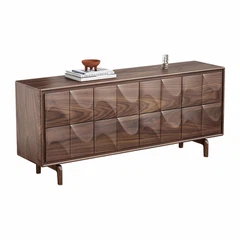

Transporting an all wood sideboard requires careful planning and execution to ensure it arrives at its destination in pristine condition. As a seasoned all wood sideboard supplier, I've encountered numerous scenarios and learned the best practices for safe transportation. In this blog post, I'll share my expertise on how to transport an all wood sideboard effectively.


Preparation Before Transport
Before you even think about moving the sideboard, it's essential to prepare it properly. This involves cleaning the sideboard to remove any dust or debris that could potentially scratch the wood during transport. Use a soft, dry cloth to wipe down the entire surface, including the drawers and shelves.
Next, remove all movable parts such as drawers, shelves, and doors. These parts are often the most vulnerable during transit and can easily get damaged or cause damage to the rest of the sideboard. Label each part clearly to ensure easy reassembly later. For example, you can use masking tape and a marker to mark each drawer and its corresponding position in the sideboard.
Once the movable parts are removed, protect the sideboard with appropriate packing materials. Bubble wrap is an excellent choice for cushioning the wood and preventing scratches. Wrap the entire sideboard, paying special attention to the edges and corners, which are more likely to get damaged. You can also use furniture blankets or moving pads for an extra layer of protection. Secure the packing materials in place with packing tape.
Choosing the Right Transport Method
The choice of transport method depends on several factors, including the distance of the move, the size and weight of the sideboard, and your budget. For local moves, renting a moving truck or hiring a local moving company may be the most cost - effective option. If you choose to rent a truck, make sure you have the necessary equipment such as furniture dollies and straps to secure the sideboard during transit.
For long - distance moves, professional freight carriers are often a better choice. They have the experience and equipment to handle large and heavy items like all wood sideboards. When selecting a freight carrier, look for one that specializes in transporting furniture. Check their reviews and ratings to ensure they have a good track record of delivering items safely.
Loading the Sideboard
Loading the sideboard correctly is crucial to prevent damage. If you're using a moving truck, start by placing a layer of furniture blankets or moving pads on the floor of the truck to create a cushioned surface. Then, carefully lift the sideboard onto the truck. It's best to have at least two people to handle the lifting to avoid injury.
Position the sideboard in the truck so that it is stable and won't shift during transit. If possible, place the sideboard against a wall or other stable object in the truck. Use furniture straps or ropes to secure the sideboard in place. Make sure the straps are tight enough to prevent movement but not so tight that they damage the wood.
If the sideboard is being transported by a freight carrier, they will have their own loading procedures. However, it's still a good idea to communicate your concerns about the sideboard's safety to the carrier. You can ask them to take extra precautions when loading the sideboard, such as using padding and securing it properly.
During Transit
During transit, the sideboard is at risk of being damaged by vibrations, bumps, and sudden stops. If you're transporting the sideboard in a moving truck, drive carefully and avoid rough roads as much as possible. Take your time and make smooth turns and stops.
If the sideboard is being shipped by a freight carrier, they should have measures in place to protect the item. However, you can still track the shipment to ensure it is on schedule and to be aware of any potential issues. Most freight carriers offer online tracking services that allow you to monitor the progress of your shipment.
Unloading and Reassembly
Once the sideboard arrives at its destination, it's time to unload and reassemble it. Unload the sideboard carefully, following the same safety precautions as when loading. Place it in its intended location and make sure it is level.
Reassemble the movable parts according to the labels you made earlier. Take your time to ensure that each part fits correctly. If you encounter any problems during reassembly, refer to the sideboard's instruction manual or contact the manufacturer for assistance.
Additional Considerations
In addition to the basic steps of transporting an all wood sideboard, there are a few other things to consider. For example, if the sideboard is antique or has special finishes, you may need to take extra precautions. You can consult a professional furniture conservator for advice on how to protect these types of sideboards during transport.
Also, consider purchasing insurance for the sideboard during transit. This can provide financial protection in case the sideboard is damaged or lost. Most moving companies and freight carriers offer insurance options, so make sure to ask about them.
Conclusion
Transporting an all wood sideboard can be a challenging task, but with proper planning and execution, it can be done safely. As an all wood sideboard supplier, I understand the importance of ensuring that our products reach our customers in perfect condition. By following the steps outlined in this blog post, you can minimize the risk of damage during transportation.
If you're in the market for an All Wood Sideboard, we have a wide range of options to choose from. Our sideboards are made from high - quality wood and are designed to be both functional and stylish. We also offer other related products such as Wooden Wine Cooler Cabinet and Modern Dining Table Solid Wood. If you're interested in purchasing any of our products or have any questions about transporting them, please don't hesitate to contact us for more information and to initiate a procurement discussion.
References
- "Furniture Moving Guide," Moving.com
- "Tips for Transporting Valuable Furniture," American Furniture Manufacturers Association