

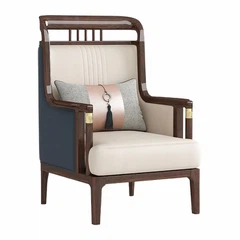
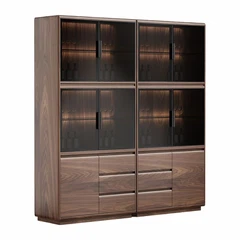
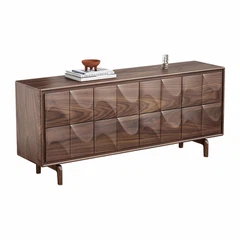
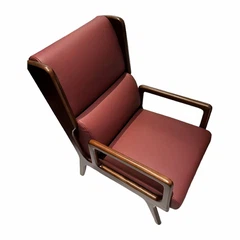
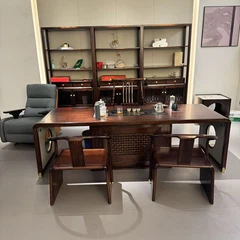

Wooden furniture can be divided into three types: ordinary solid wood furniture, mahogany furniture, and engineered wood furniture.
Ordinary solid wood furniture:
In contrast to mahogany furniture, ordinary solid wood furniture refers to white wood furniture, which includes various types of wood such as birch, olive, pine, catalpa, rubberwood, beech, and ebony.
The characteristics of solid wood furniture are :
Solid and durable, with a rich texture, simple and elegant, luxurious and grand.
Solid wood furniture is relatively large, making it suitable for homes, offices, hotels, and guesthouses with ample space. However, solid wood furniture is also more expensive, resulting in a higher price tag.
Many solid wood furniture products are not made of pure solid wood, but are made of engineered wood (such as MDF, particleboard, etc.) with a wood veneer. These types of furniture differ significantly in cost and price from those made of pure solid wood, so it's important to learn how to distinguish and identify them.
Marble furniture :
Furniture panels, bamboo, or main decorative parts are made of artificial or natural marble. Marble is often used for coffee tables, tea tables, and dressing table panels.
Rosewood furniture :
Rosewood furniture has a long history and complex craftsmanship. Most pieces feature exquisite and delicate hand carvings and are made from relatively precious woods such as rosewood, sandalwood, and ebony. The styles and craftsmanship of rosewood furniture are relatively traditional, and it belongs to the category of high-end furniture.
Artificial board furniture :
Engineered wood furniture refers to furniture made from engineered wood products such as MDF, particleboard, polystyrene board, waxed veneer, fire-resistant board, and melamine board. Polystyrene board, fire-resistant board, and melamine board can be directly cut and processed before assembly, without the need for painting. MDF and particleboard, however, require veneer or wood veneer before painting. Furniture made from MDF, such as desks, computer desks, and cabinets, is often designed for easy assembly and disassembly; MDF veneer furniture is mostly designed for easy assembly and disassembly. Particleboard furniture is either designed for easy assembly or it is nailed together as a single unit, then plastered, sanded, and veneered. This latter type of product is less expensive than easy-to-assemble furniture.
Upholstered furniture :
It refers to furniture made with various genuine leather, imitation leather, fabric, etc. as the surface material, such as various sofas and mattresses.
Metal furniture is made of metal materials, consisting of hollow round tubes, square tubes, new cast iron, flat iron, iron wire, etc., welded or assembled together. Metal furniture can be divided into the following three types:
Iron furniture :
It is made of iron material and has a surface that is galvanized, copper-plated, or painted.
Stainless steel furniture
Made of stainless steel, it is more luxurious and durable than iron furniture.
alloy furniture
Made from new alloy materials, such as aluminum alloy, alloy furniture is lightweight, sturdy, and more practical .
Glass furniture :
Pure glass furniture is rare; it's usually combined with metal or wood. Glass furniture is characterized by clean, crisp lines and a pleasing aesthetic. It primarily consists of dining tables, coffee tables, and other similar pieces.
Bamboo and rattan furniture :
Made from natural materials such as bamboo, rattan, and willow, such as bamboo flooring, bamboo tables, bamboo chairs, rattan chairs, and various woven willow utensils.
Furniture can be classified according to its function as follows:
Residential furniture. Office furniture. Hotel furniture. Kitchen furniture. Public space furniture. School furniture. Theater furniture. Hospital furniture.
Household furniture :
Furniture used in residential homes mainly includes: bedroom sets (bed, bedside tables, wardrobe, dressing table, dressing stool), writing desks, computer desks, dining tables, dining chairs, coffee tables, tea cabinets, sofas, wine cabinets, TV cabinets, side cabinets, shoe cabinets, etc. The materials used in the production of residential furniture are the most diverse, and the styles and price ranges are also quite wide.
Office furniture:
refers to all types of furniture used in offices, mainly including: executive desks, manager desks, staff desks, computer desks, filing cabinets, partitions, conference tables, conference chairs, executive chairs, mid-level chairs, staff chairs, and sofas. Factories that produce office furniture should have their own installation teams.
Hotel furniture :
Hotel furniture encompasses several categories: suite furniture, office furniture, and furniture for showers and saunas. The production of hotel furniture is often integrated with hotel decoration, and some products are designed and manufactured according to specific circumstances. Hotel furniture has its own unique structure and style, often using high-quality materials and featuring numerous carvings.
Furniture can be classified by structure as follows: fully assembled furniture, disassembled furniture, folding furniture, modular furniture, wall-mounted furniture, and suspended furniture.
Fully Furniture Set:
Fully assembled furniture refers to furniture that is a single unit and cannot be disassembled. The various parts of this type of furniture are permanently connected together using materials such as wood, glue, and nails.
Furniture disassembly and assembly: The parts of disassembled furniture are connected by connectors or wooden blocks, etc. They can be disassembled, but a professional needs to be sent to the customer for installation.
Folding furniture:
Folding furniture reduces the space it occupies by folding, making it more convenient to use. Examples include chairs, tables, and dining tables, and it is mostly made of metal.
Modular furniture:
Modular furniture is a set of furniture composed of several individual pieces. These individual pieces are arranged together to form a set of furniture. When arranging the furniture, different arrangements can be made according to different rooms and preferences, resulting in different shapes and styles.
Furniture with wall panels:
Wall-mounted furniture refers to furniture custom-made to the actual dimensions of a room, integrated with the wall, or that can serve as a wall itself.
Connected wall furniture can save a lot of space and is very popular with residents and customers.
Suspended furniture:
This type of furniture makes full use of space and opens up new avenues for the development of three-dimensional furniture, such as wall cabinets and wall-mounted kitchens.
Furniture can be categorized by era, such as modern furniture and Ming and Qing dynasty furniture. The Ming and Qing dynasties represent the golden age of furniture production and development in my country; therefore, many antique-style furniture pieces today are primarily imitations of those from this period.
Antique-style furniture :
Antique-style furniture uses specific techniques to mimic the aged appearance of antique furniture over time in terms of style, structure, and appearance.
There are two ways to achieve an antique finish on antique-style furniture: palatial antique style and country antique style.
Modern furniture :
Compared to antique-style furniture, modern furniture has the following characteristics:
1. More diverse in the materials used
2. It has a richer structure, uses more connecting keys, and is detachable.
3. The designs have become more concise and modern.
4. In terms of style, it can better integrate with the modern environment.
5. It features a more dynamic surface treatment and incorporates more advanced technologies.
In short, modern furniture, through its colors and overall design, better reflects modern civilization, is closer to people's lives, and embodies modern aesthetic tastes.
Furniture materials:
Softwoods: Red pine, white pine, Masson pine, larch, Scots pine, pine, fir, linden, poplar, birch
Hardwoods: Ash, Elm, Oak, Watermelon, Southwest Birch, Yellow Pineapple, Catalpa
Precious woods: camphor wood, beech wood, sandalwood, rosewood, ironwood, ebony
Imported timber: teak, eucalyptus, mahogany, beech, oak, sappanwood
Sheet size requirements
Thin sheet width: 50-150mm, 50-210mm, 50-240mm
Thickness 10mm 12mm 15mm
Medium plate width: 70-270mm, 80-270mm, 90-300mm
Thickness 21mm 25mm 30mm
Thick plates, widths 120-300mm, 150-300mm, 180-300mm
40mm 45-50mm 55-60mm
Wood width: 50mm, 50-70mm, 50-80mm
Thickness 18mm 25mm 30mm