


Chinese Solid Wood Furniture vs. Overseas Solid Wood Furniture: A Four-Dimensional Comparison Table
| Comparison Dimension | Chinese Solid Wood Furniture | Overseas Solid Wood Furniture (Europe/U.S./Japan, etc.) | Core Difference Interpretation |
|---|---|---|---|
| Price | Significant advantage. At the same quality level, Chinese-made products are generally 30%–60% lower in price. For example, a custom North American black walnut bed in China costs about RMB 18,000, while an IKEA pine bed of the same size in Canada costs RMB 8,000 (a price difference of 55%). | Expensive. Affected by labor costs, brand premium, tariffs, and logistics. High-end furniture in Europe and the U.S. can reach hundreds of thousands or even millions. | It is not about being cheap, but about achieving the ultimate "cost-performance ratio." China's strength lies in the scale effect and efficient supply chain brought by industrial clusters. |
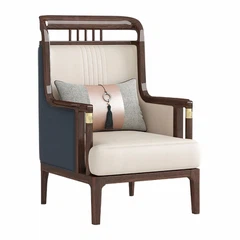
| Design | Polarized. The mass market is mainly dominated by "modern minimalism" and "new Chinese style"; leading brands (such as Fanjì and Shí'èr Shímàn) have strong originality and integrate Eastern aesthetics. | Clear schools of design with profound heritage. European style emphasizes luxurious carving and curves; American style is rugged, grand, and comfort-oriented; Nordic style is minimalist and practical; Japanese style is natural and Zen-like. | Chinese design is shifting from "following" to "running alongside," but it still lags behind in global top-tier design discourse power and brand accumulation. |
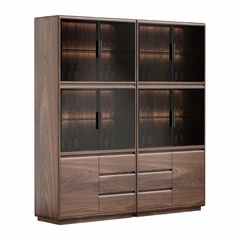
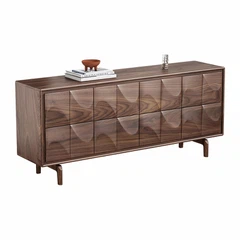
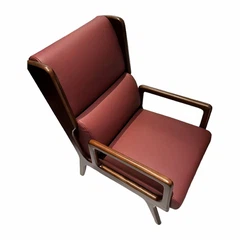
| Styling | Suite-based and cabinet-dominated. Emphasis is placed on formal connections between products, with cabinet products serving as the main carriers of style and accounting for a large proportion. | Ultimate single-piece focus and diverse scenarios. Greater emphasis is placed on the artistry and historical character of individual furniture pieces. For example, a classic Windsor chair can be passed down for a hundred years. | China emphasizes the supporting nature of "whole-home furnishing," while overseas markets emphasize the timelessness of "classic individual pieces." |
| Value | Undergoing an upgrade from "use value" to "cultural value." In the past, durability and environmental friendliness were the selling points; now leading brands are beginning to export Eastern lifestyles and smart home solutions. | Mature brand premium and historical assets. Value composition = scarce wood + craftsmanship + brand story + collectible inheritance. Many European brands have a history of over a hundred years. | China's core value lies in its "industrial ecosystem" and "speed of innovation"; the overseas core value lies in "historical heritage" and "brand assets." |
In-Depth Analysis: Why Do These Differences Exist?
Understanding the causes behind these differences is more important than only looking at superficial phenomena.
The Secret of Price: Not Cheap, but the "Ultimate Cost-Performance Ratio"
As we discussed before, China has the world's most complete furniture industry chain. Taking the three major bases of Foshan, Ganzhou, and Chengdu as examples, their output value accounts for as much as 55%. The "half-hour supporting circle" brought by such industrial clusters has compressed the costs of raw material procurement, processing, and logistics to the extreme. At the same time, the penetration rate of CNC machining centers exceeds 60%, edging precision reaches 0.1 mm, and the efficiency improvement brought by intelligent manufacturing is directly converted into price advantages.
Design and Styling: Cultural Soil Determines Product Form
Chinese logic: The rise of modern Chinese solid wood furniture is closely related to real estate development and the demand for "move-in-ready" integrated home furnishing. Therefore, enterprises tend to develop suite-based products, allowing consumers to purchase a full set of furniture for the living room, bedroom, and dining room in one stop while ensuring style consistency.
Overseas logic: The furniture markets in Europe and the U.S. are highly mature, and consumers are more inclined toward mixed matching. They may buy a classical Italian sofa and pair it with a modern glass coffee table. Therefore, overseas brands focus more on perfecting individual products to form unique stylistic symbols.
The Reconstruction of Value: The Historical Process You Are Participating In
The value of high-end overseas furniture is that it is a "friend of time." After decades or even centuries of accumulation, the brand itself becomes value. The value of Chinese solid wood furniture, however, is being redefined by you and countless peers.
From material competition to design competition: The market is eliminating the practice of relying solely on wood species to sell at high prices, and instead is increasing added value through design, intelligent manufacturing, and environmental standards.
The cultural dividend of "new Chinese style": Brands represented by Fanjì and Shí'èr Shímàn combine Song-style aesthetics, Ming-style lines, and modern lifestyles, and are exporting Eastern aesthetics to the world. This is a huge potential advantage for you when expanding into overseas markets such as the Middle East and Southeast Asia, where Chinese culture has influence.
How to Play the Cards in Your Hand Well?
Leverage the Price Advantage, but Tell the Value Story Well
When quoting Middle Eastern customers, do not just say "we are cheaper." Emphasize that "at the same price level, we can provide more complex craftsmanship and higher-quality wood than European products."
Use "Suite-Based Design" to Meet the Needs of Large Homes in the Middle East
There are many luxury homes in the Middle East, and they have high requirements for the overall spatial effect. This is exactly where China's "suite-based" design can be applied. You can provide complete solid wood solutions from the living room to the bedroom, rather than just individual furniture pieces.
Try Exporting the Aesthetics of "New Chinese Style"
As China's cultural influence rises, "new Chinese style" has also begun to gain popularity in the high-end Middle Eastern market. If you have suitable styles, you can absolutely try positioning them as high-premium products.